Study: AI use might need more water than drank from bottles – San Francisco Examiner
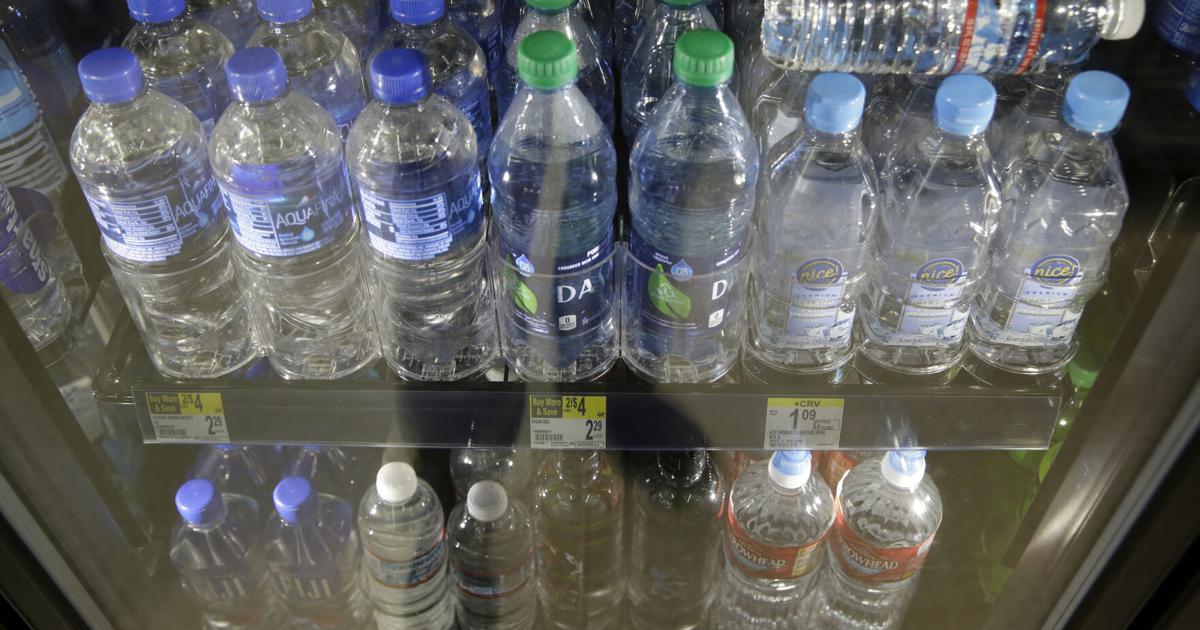
Artificial-intelligence systems such as ChatGPT might already be consuming more water than is sold in bottles around the world, according to new research.
De Vries-Gao determined that training and running AI was generating as much as 79.7 million tons of carbon dioxide equivalents, which is nearly 30 million tons more than New York City’s average annual carbon dioxide emissions.
Studies have attempted to assess the environmental effects of artificial intelligence by looking at the energy consumed by data centers — but data centers are used for more than just AI.
Apple CEO Tim Cook (foreground, center) and OpenAI CEO Sam Altman’s companies rely on different methods to disclose their carbon emissions and water consumption stemming from AI’s energy usage, which de Vries-Gao found were not wholly transparent.
Artificial-intelligence systems such as ChatGPT might already be consuming more water than is sold in bottles around the world, according to new research.
The training and use of artificial-intelligence systems such as ChatGPT might already result in more annual carbon emissions than New York City and more water consumption than all the bottled water drank globally, according to new research.
In one of the first studies to focus specifically on the environmental impact of AI, a new report in the data-science journal Patterns estimated that the technology’s water consumption in particular was likely far higher than previous estimates. The study indicates that both AI’s carbon emissions and its water consumption are growing rapidly, thanks to its surging power use.
“These are definitely quite huge numbers,” the study’s author, Alex de Vries-Gao, a Ph.D. candidate at Vrije Universiteit Amsterdam, told The Examiner.
The big AI developers — including San Francisco-based OpenAI and Mountain View-based Google — have released scant information about the energy use and resulting environmental consequences of training and running their systems. That has left researchers scrambling to try to come up with reasonable estimates based on what information is available.
Previous studies have attempted to assess AI’s environmental impact by looking at the energy consumed by data centers in general. But data centers are used for a lot more than just AI — they store family photos, send and route email, and allow users to compose documents and run numerous apps.
De Vries-Gao is among the first researchers to try to separate out AI’s energy use and environmental consequences from everything else.
His new report builds on one he published in the energy-research journal Joule in June. In that report, he estimated how much power AI is consuming by looking at how much energy the specialized AI chips sold by Nvidia, AMD and other companies each use. He then multiplied that figure by the estimated number of chips those companies produced in 2023 and 2024 to determine how much total power those chips were using by the end of 2024.
De Vries-Gao next factored in the extra energy demand of other components in AI systems, how frequently the systems were likely in use and the amount of energy that was needed to keep those systems cool when they’re running.
All told, he figured that AI systems required between 5.3 gigawatts and 9.4 gigawatts of energy to run by the end of last year. Assuming that production of AI chips increased at the same rate this year as it did last year, de Vries-Gao estimated that AI-related energy demand could reach as high as 23 gigawatts by the end of this year.
Over the course of a year, that kind of demand would result in total energy consumption of 201.5 terawatt hours. Were AI a country, its energy use would rank 25th in the world, just behind Egypt and ahead of Malaysia, according to data from Ember, an energy-research firm. Those countries have 188 million and 38 million people, respectively, according to United Nations data.
“The share of AI power demand in global data centers is just … increasingly big,” said de Vries-Gao, who is also founder of Digiconomist, a research firm that focuses on the environmental consequences of new technologies.
Studies have attempted to assess the environmental effects of artificial intelligence by looking at the energy consumed by data centers — but data centers are used for more than just AI.
That demand has environmental consequences. A large portion of electricity around the world is generated from fossil fuels such as coal and natural gas, the burning of which releases greenhouse gases into the atmosphere.
Meanwhile, AI and other chips generate heat when processing data; to remain functional, they need to be cooled. Power plants have similar needs. The cooling systems of both frequently result in water evaporation. By definition, that water doesn’t make it back to the surrounding watershed and is unavailable for other local users.
In his new paper, de Vries-Gao scrutinized the environmental disclosures made by big-tech companies — including Google, Meta, Amazon and Apple — to get a sense of the degree to which AI’s energy use was leading to carbon emissions and water consumption.
The information the tech giants disclose is inconsistent and incomplete, de Vries-Gao found. Apple makes public the amount of energy its data centers consume and its companywide carbon emissions, but it doesn’t say how much carbon is being emitted by the electricity plants that actually power its server facilities, or how much water is being consumed by those power plants or its data centers, according to his research.
Meta, by contrast, discloses both the amount of carbon being emitted by the power plants that power its data centers and the water consumed by those data centers, but not how much water is being used by the power plants it depends on, according to de Vries-Gao’s report. At the other extreme, Amazon discloses almost nothing about the environmental effects of its data centers, he found.
But across the industry, “their disclosure is extremely lacking,” he said.
Supe says his proposal aims to close “loophole” allowing return to office after taking a break
CDC advisory committee’s vote to no longer universally recommend newborns receive the shot sparks Bay Area criticism
Alan Wong, officially running to serve remainder of term, supports putting coastal roadway’s fate back on ballot
Apple CEO Tim Cook (foreground, center) and OpenAI CEO Sam Altman’s companies rely on different methods to disclose their carbon emissions and water consumption stemming from AI’s energy usage, which de Vries-Gao found were not wholly transparent.
Still, de Vries-Gao took the numbers the companies did disclose and essentially averaged them together to come up with some estimates of how much carbon they were emitting and how much water they were consuming for each watt of electricity they used.
By his calculations, the American tech companies were generating about 0.32 to 0.35 tons of carbon-dioxide equivalents per megawatt hour of electricity used. Those are probably good figures for the U.S. and Europe, given those companies primarily have their data centers in those regions, and the electricity grids of both are relatively clean.
But Chinese companies Baidu and Tencent respectively generate about 0.64 and 0.57 tons of carbon-dioxide equivalents per megawatt hour, de Vries-Gao found. Those figures indicate that data centers outside the U.S. and Europe are likely much more carbon-intensive.
Overall, he found that the publicly available data seemed to corroborate an estimate determined by the International Energy Agency based largely on proprietary data. The IEA determined that as of 2024, data-center operations worldwide yielded about 0.4 tons of carbon per megawatt hour.
De Vries-Gao then multiplied that figure by his own estimates of AI energy use. He determined that training and running AI was generating between 32.6 and 79.7 million tons of carbon dioxide equivalents, depending on whether he used the 2024 energy-use estimate or the 2025 one. By contrast, New York City altogether generates about 50 million tons of carbon dioxide each year, according to data collected by the city.
De Vries-Gao determined that training and running AI was generating as much as 79.7 million tons of carbon dioxide equivalents, which is nearly 30 million tons more than New York City’s average annual carbon dioxide emissions.
Getting at AI water usage was a bit more difficult, but de Vries-Gao again relied on his previous power estimates and company disclosures. Combining information provided by the big tech companies or inferred from what they made public, he figured their data centers consumed about 0.6 liters of water per kilowatt hour of electricity they used. That was basically in line with the IEA’s estimates.
But based on the company disclosures, he estimated that the electricity plants powering their data centers consumed about 3.4 liters of water per kilowatt hour. That was more than three times the IEA’s own estimate.
He then added those figures together and multiplied them by his estimates of AI power use, determining that the technology was now consuming between 312.5 billion liters and 764.6 billion liters of water. Globally, people drink about 446 billion liters of bottled water annually.
That’s an even higher estimate that UC Riverside professor Shaolei Ren and his team of researchers came up with in a report last year. In their own report, they forecast that water consumption from data centers as a whole could reach as high as 600 billion liters by 2027.
Ren said he’d read de Vries-Gao’s study and considered the latter’s methodology not only reasonable, but rigorous. What’s more, Ren said, de Vries-Gao’s estimates likely understate how much water consumption AI is responsible for, since de Vries-Gao did not take into account water used in producing AI chips and other equipment used in AI data centers.
In his own study, Ren and his colleagues tried to be conservative in their estimates.
“We didn’t realize that we were so conservative,” he said.
One of the big questions right now is whether the benefits individual communities or society as a whole are getting from AI are worth the costs, Ren and de Vries-Gao said. De Vries-Gao said his exercise indicates it’s difficult to answer that question because so little data is being made public about the environmental effects.
As a society, “we can … decide, like, ‘OK, AI is totally awesome and it’s totally worth all these costs, and we’re happy to carry those costs as a society,’” he said. “But before we can collectively decide that, we still need to be able to assess those costs.”
“I think right now, you can’t do it,” he said. “The information is not there.”
If you have a tip about tech, startups or the venture industry, contact Troy Wolverton at twolverton@sfexaminer.com or via text or Signal at 415.515.5594.
{{description}}
Email notifications are only sent once a day, and only if there are new matching items.
Your browser is out of date and potentially vulnerable to security risks.
We recommend switching to one of the following browsers:
Sorry, an error occurred.
Already Subscribed!
Cancel anytime
Account processing issue – the email address may already exist
Ben Pimentel’s new weekly newsletter covering the biggest technology stories in San Francisco, Silicon Valley and beyond.
See what you missed during work.
Receive our newspaper electronically with the e-edition email.
Receive occasional local offers from our website and its advertisers.
Sneak peek of the Examiner real estate section.
We’ll send breaking news and news alerts to you as they happen.
Thank you .
Your account has been registered, and you are now logged in.
Check your email for details.
Invalid password or account does not exist
Submitting this form below will send a message to your email with a link to change your password.
An email message containing instructions on how to reset your password has been sent to the email address listed on your account.
No promotional rates found.
Secure & Encrypted
Secure transaction. Secure transaction. Cancel anytime.
Thank you.
Your gift purchase was successful! Your purchase was successful, and you are now logged in.
A receipt was sent to your email.
